
5 Dangerous Trees You Should Remove Immediately
Some trees pose an immediate danger to your home and family. Here are 5 types of dangerous trees you should not ignore on your property.
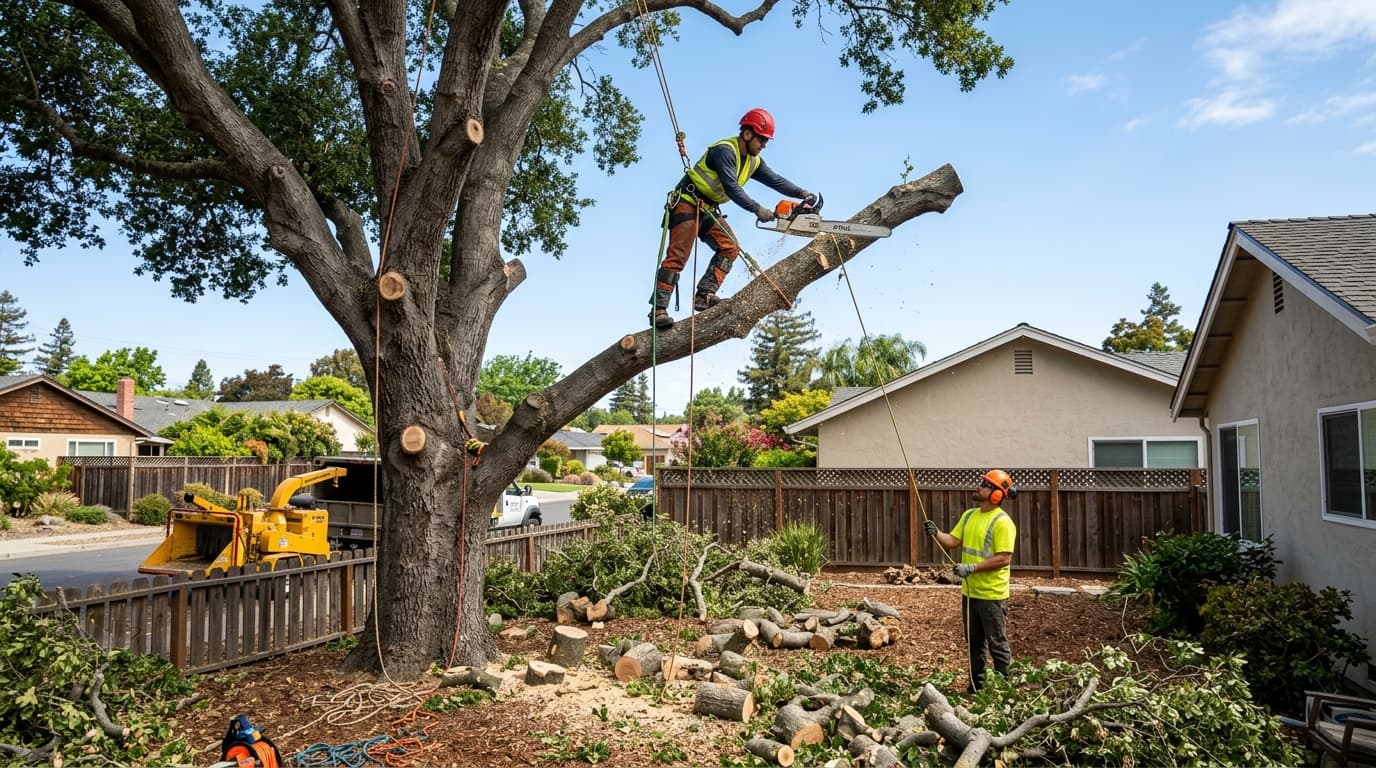
Not Every Dangerous Tree Looks Dangerous
When most people think of a dangerous tree, they picture a dead, bare skeleton looming over a house. But many hazardous trees still have green leaves, full canopies, and appear perfectly healthy from the outside. The danger is hiding beneath the bark. Here are five types of trees that should be removed without delay.
1. Trees with Large Dead Branches Over Your Home
Dead branches — sometimes called widow-makers in the tree industry — can fall without warning. Unlike live branches that are flexible and attached firmly to the tree, dead branches are brittle and their attachment point is weakened by decay. A single dead branch over your roof can cause thousands of dollars in damage when it falls.
If an arborist determines that the deadwood cannot be safely pruned without compromising the tree, the entire tree may need to come down.
2. Trees with Severe Trunk Decay
Internal trunk decay is one of the most dangerous conditions a tree can have because it is often invisible from the outside. Fungi like bracket fungus and shelf mushrooms growing on the trunk are telltale signs of advanced internal decay. By the time you see mushrooms on the trunk, significant damage has already been done inside.
A tree with severe trunk decay has lost the structural wood that keeps it standing. It can fail catastrophically — the entire trunk snaps rather than a single branch falling.
3. Trees with Root Damage from Construction
Construction projects are one of the leading causes of tree death and failure. Digging trenches, compacting soil with heavy equipment, or changing the grade around a tree can sever or suffocate roots. The effects often are not visible for several years, but when the tree finally declines, it can happen quickly.
If a tree has been impacted by recent construction and is now showing signs of decline — thin canopy, small leaves, dieback at the branch tips — have it assessed promptly.
4. Trees Leaning Toward Structures
A tree that has always had a slight lean is one thing. A tree that has recently started leaning — especially toward your house, garage, or deck — is an entirely different situation. A new lean usually means the root system is failing. Look for soil heaving on one side of the base and exposed roots on the other. This tree could fall at any time.
5. Trees with Multiple Trunk Splits
Trees that split into two or more main trunks at a narrow angle (called a co-dominant stem) have a built-in weakness. The junction between the trunks often includes bark that is trapped inside the joint, preventing the wood from fusing properly. Over time, this weak point can split apart — especially under the weight of ice, snow, or wind.
If you see a dark seam or crack where the trunks join, or if the trunks are visibly pushing apart, this tree is a high-risk candidate for failure.
Do Not Wait
If any of these descriptions match a tree on your property, do not put off the assessment. The cost of proactive removal is always less than the cost of emergency removal plus property repairs. Call Tree Climber Unlimited at (209) 660-3450 for a free hazard assessment. We will give you an honest evaluation and clear recommendation.