
Hazard Tree Assessment: Protecting Your Calaveras County Property
Worried about a tree on your property? Learn how hazard tree assessments work and why they are essential for Calaveras County homeowners.
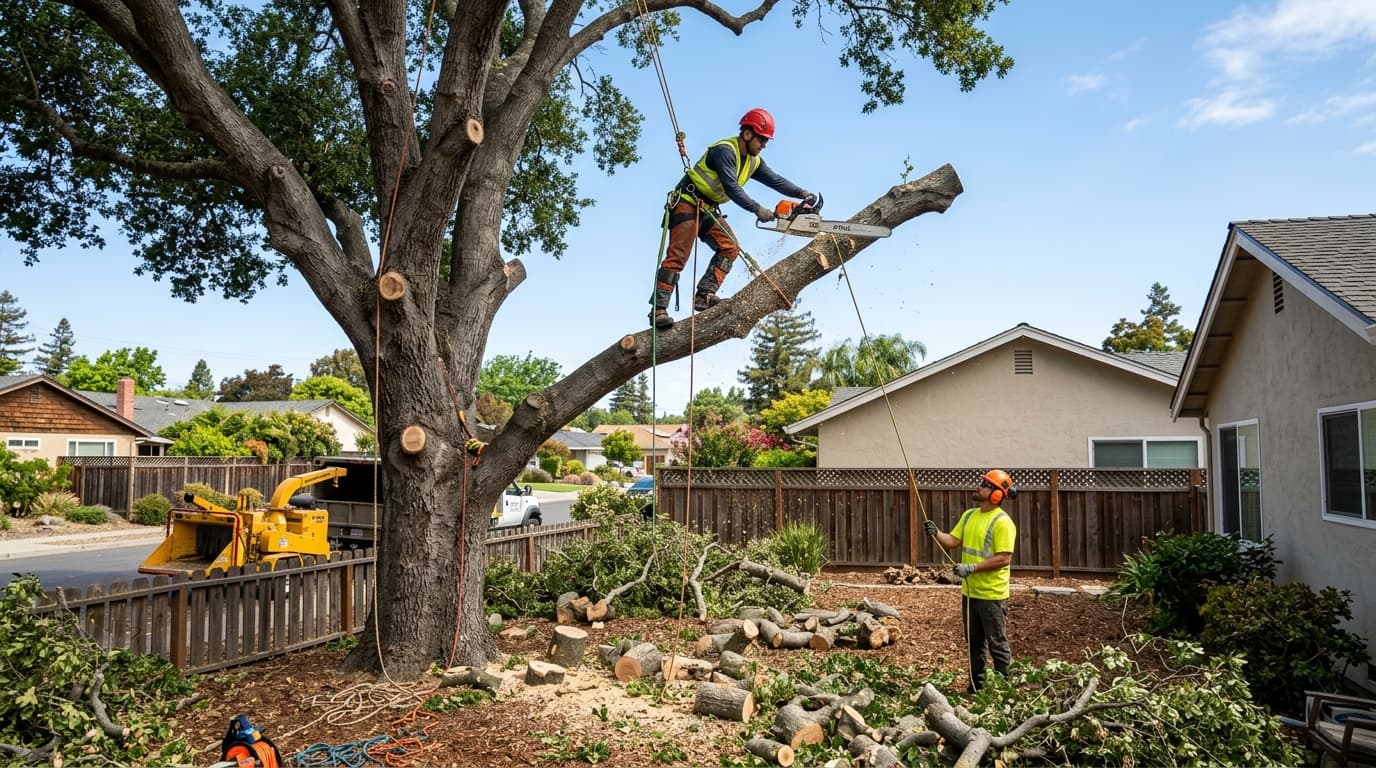
What Is a Hazard Tree?
A hazard tree is any tree with structural defects or health problems that make it likely to fail — meaning it could drop branches or fall entirely. When a hazard tree is near your home, driveway, play area, or power lines, it becomes a serious safety concern.
The tricky part is that many hazard trees look perfectly fine from the outside. Internal decay, root damage, and structural weaknesses are not always visible to the untrained eye. That is where a professional hazard tree assessment comes in.
Why Calaveras County Properties Need Regular Assessments
Calaveras County sits in the Sierra Foothills, a region with hot, dry summers and wet winters. Drought stress, wildfire risk, and winter storms all put pressure on trees. The rocky, decomposed-granite soils common in our area can also affect root stability.
Add to that the fact that many properties in San Andreas, Angels Camp, Murphys, and surrounding communities have mature oaks and pines that are decades old. Older trees are more prone to internal decay and structural failure.
What Happens During a Hazard Tree Assessment?
A certified arborist will visit your property and evaluate your trees for signs of risk. The assessment typically includes:
- Visual inspection: Looking for cracks, splits, dead branches, leaning, mushrooms or fungal growth at the base, and signs of decay
- Root zone evaluation: Checking for root damage from construction, soil erosion, or grade changes
- Canopy assessment: Evaluating the crown for dieback, asymmetry, or heavy limbs
- Target analysis: Identifying what the tree could hit if it fails — your home, a car, a walkway, a neighbor's property
Based on the findings, the arborist will recommend one of several courses of action: monitoring, pruning to reduce risk, cabling and bracing for structural support, or removal if the tree cannot be saved.
Signs You Should Schedule an Assessment
Call for a hazard tree assessment if you notice any of the following:
- Large dead branches in the canopy
- Mushrooms or shelf fungus growing at the base of the tree
- Cracks or splits in the trunk
- The tree is leaning more than it used to
- Roots are visibly damaged or exposed
- The tree was recently hit by lightning or damaged in a storm
Prevention Is Always Cheaper Than Cleanup
A proactive hazard assessment costs a fraction of what you would pay for emergency removal or, worse, repairs to your home after a tree failure. It also protects your family. An ounce of prevention truly is worth a pound of cure when it comes to trees.
Schedule Your Assessment
Tree Climber Unlimited provides professional hazard tree assessments throughout Calaveras County and surrounding areas. Our experienced crew will evaluate your trees and give you honest, practical recommendations. Call Tree Climber Unlimited at (209) 660-3450 for a free estimate.